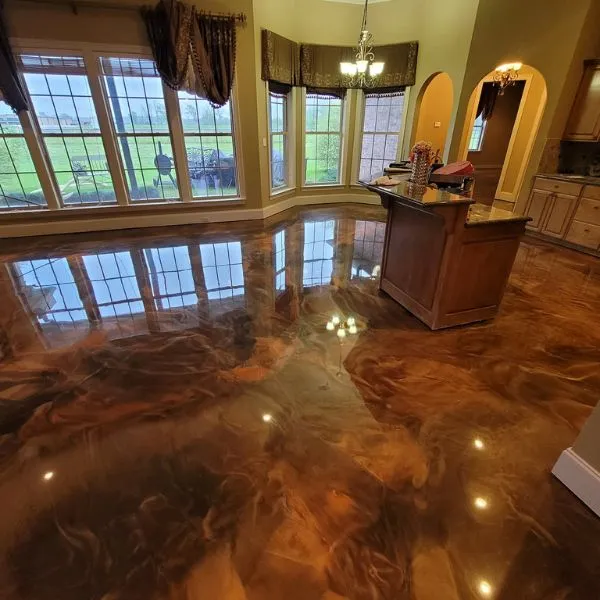
Metallic is the design finish Southwest Florida homeowners ask about most by name — the marbled, liquid-glass look that turns a Cape Coral lanai entry or a riverfront great room into something people stop and photograph. It is one of four decorative epoxy families (alongside flake, quartz, and solid color), but in coastal Lee County the deciding factor is rarely the color you pick. It is whether the floor is built and topcoated to shrug off salt-laden air, a high water table, and a sun strong enough to bleach a dock in two seasons. Specify the topcoat right and a metallic floor stays gallery-deep for years; skip it and the same floor ambers out by the second winter.
A lot of the homes we coat around the Cape Coral–Fort Myers metro are second residences, canal-front builds, or seasonal places that sit closed up through the August heat, then fill back up once the snowbirds return in the fall. That rhythm changes the job description. A floor here has to look showpiece-perfect for an owner who flies in for the season, survive a shut-up house baking at 95-degree humidity, and stand up to sandy, salty feet tracking in straight off the boat. Metallic can do all three — but only when it is engineered for this coast, not pulled off a generic finish chart.
This guide leads with metallic, because that is the floor most design-minded Lee County owners are already picturing, then walks through the flake, quartz, and solid-color alternatives so you can see exactly where each one earns its keep. We install all four across Cape Coral, North Fort Myers, San Carlos Park, Estero, Bonita Springs, and the Beaches, and we will tell you plainly when a swirling metallic floor is the right call and when a tougher finish serves you better. Want a recommendation for your slab? Call (239) 320-7135 for a free estimate, or read on first.
Flake (Chip) Epoxy
If metallic is the floor you show off, flake is the floor you live on. It is the everyday pick for garages and lanais across Lee County, and around here it carries a practical edge that has nothing to do with looks: the speckled, multi-tone surface camouflages the grit and sand that get tracked in from a coastal lifestyle, and the built-up texture gives your feet something to grab when a Gulf squall blows rain in under the garage door. Chips of colored vinyl are scattered into the still-wet base by hand, then sealed under a clear coat, so what you end up with reads as a finished room rather than a bare slab.
The texture earns its keep in other ways too. It shrugs off hot-tire pickup from a truck parked after a run down Pine Island Road in July, it disguises the small flaws common in older Cape Coral and North Fort Myers slabs, and it lets you hose the floor down without turning it into a skating rink. Color choice is wide open, from understated coastal grays and sand tones that fade into a clean garage to high-contrast blends with a fleck of blue or copper for owners who want the floor noticed. Dial the chip density up for full coverage or keep it light to let the base tone show, then seal it with a UV-stable polyaspartic and you have the best all-around value we install for this climate.
Metallic Epoxy
This is the one most readers came here for, so let's spend real time on it. A metallic floor starts as clear resin carrying a fine reflective pigment; the installer then chases that pigment across the slab while it is still moving, working it with rollers, a brush, and a quick pass of heat to open the surface so the color blooms into veins, ripples, and pools of depth. Cured, it can read like polished travertine, sun-on-water, or a slow swirl of molten metal — and because every pour is steered by hand in real time, the floor in your home will not exist anywhere else. There is no repeat pattern to match and no two pours alike. That is the appeal, and it is also why the installer's hand matters more on this finish than on any other.
For the taste we see in Southwest Florida, metallic leans into the light. Owners here gravitate toward Gulf-water aquas and seafoam greens, oyster and sand neutrals, deep storm-grey pearls for a more modern look, and warm copper or bronze for a coastal-luxury feel that plays off natural wood and stone. Because so many of our great rooms and lanai entries are flooded with daylight and frame a canal or preserve view, a marbled metallic floor stops being a coating and starts acting like a slab of stone you would pay far more to import. It is the natural pick for entryways, open living areas, home gyms, model homes, boutique retail, and salons — anywhere the floor is meant to be admired rather than just walked across.
In Lee County, metallic runs about $9 to $14 per square foot installed, and where you land in that range tracks the design, not the room. A single-color marble pour sits near the bottom; a multi-pigment, multi-layer floor with deep, dramatic veining reaches the top. Two local notes are non-negotiable on a metallic install here. First, the standard finish is glossy and slick, so for any space that can get wet — a lanai, a pool bath, an entry that takes wet feet off the dock — we blend a fine anti-slip aggregate into the topcoat. Second, and this is the one that protects your investment, that topcoat must be UV-stable, because nothing punishes a clear coat like the Southwest Florida sun pouring through a wall of impact glass. More on that below, because for metallic it is the whole ballgame.
Quartz Epoxy
Where metallic is about looks and flake is about value, quartz is about taking punishment. Instead of light vinyl chips, this system packs the resin with hard, graded quartz granules, building a floor that is noticeably thicker and denser underfoot. That body is what lets a quartz floor absorb dropped tools, rolling loads, and constant scrubbing without showing it, and the granular surface holds its grip even soaked — the reason it is written into the spec for the commercial kitchens, clinics, restrooms, locker rooms, and food-prep areas along US-41 and around HealthPark and Gulf Coast Medical where health codes set the bar. On the Fort Myers commercial side, a quartz or comparable broadcast system typically falls in the $3 to $8 per square foot range depending on thickness and the cove and sealer detail the job calls for.
It is not a commercial-only finish, though, and that is worth knowing for a coastal home. A busy laundry room, a boat-gear and fishing-prep room off the garage, an outdoor kitchen, or a pool bath all benefit from quartz's traction and its tolerance for standing water and salt — the exact conditions a Southwest Florida waterfront house throws at a floor. It can be tinted across a range of blends, so it need not look like a hospital corridor. Because the granule mix and build thickness are matched to how hard the space gets used, a quartz floor is priced after we walk the slab rather than quoted off a chart.
Solid Color Epoxy
Solid color is the plain-and-purposeful end of the lineup: one even tone, laid down glossy, with no chips and no pigment movement. It wipes clean with a broom and a mop and costs the least to install, which makes it the sensible answer for a storage room, a closet, a utility bay, or a rental where the floor just needs to be sealed, bright, and serviceable. In a part of the state where so much square footage is garages, sheds, and seasonal-home utility space, plenty of slabs genuinely do not need anything fancier.
The one thing it should never skip is the prep underneath it. A solid-color floor in Lee County still gets the full diamond grind, the crack and joint repair, and — this matters a great deal on our low, sandy lots — a moisture-mitigation primer to keep the high water table from pushing up through the slab and lifting the coating. Do that prep and seal it with a UV-stable topcoat, and a simple solid floor will outlast a peel-and-stick big-box kit many times over. It is the budget pick, not the cut-corners pick.
Design Styles Compared
Pull it all together and the trade-offs get clear. The numbers below are per square foot installed in the Lee County market for 2026; durability and slip ratings are relative to one another inside the epoxy family, and every one assumes a full diamond-grind prep and a UV-stable topcoat — the baseline we hold to on this coast. As a reference point, a standard two-car garage here generally lands around $2,000 to $4,500 in flake, or $4,000 to $5,500 once a polyaspartic topcoat goes over it, with metallic climbing from there depending on the finish you choose off this table.
| Style | Look | Durability | Slip Resistance | Best Room | Cost / Sq Ft |
|---|---|---|---|---|---|
| Metallic | Marbled, glossy, liquid 3D depth | High | Moderate (add aggregate when wet) | Living / lanai entry / showroom | $9–$14 |
| Flake | Speckled, multi-tone, hides sand & marks | High | Good | Garage | $5–$9 |
| Quartz | Textured, granular, tintable | Highest | Highest | Kitchen / clinic / wet rooms | $3–$8 (commercial) |
| Solid Color | Smooth, single-color gloss | Good | Moderate | Storage / utility | $5–$7 |
Not Sure Which Style Fits Your Space?
Tell us about your room and how you use it. We will recommend the right design style and give you a real number, free.
Choosing by Room
The quickest route to the right finish is to start with the room and the way a coastal household actually uses it. Match the floor to the job and the climate, and the rest falls into place.
- Great room, entry, or lanai entry: Metallic. This is its home. When the floor frames a canal or preserve view and catches daylight all day, the hand-worked marble look reads as imported stone — just spec the anti-slip aggregate on a covered lanai or any spot that takes wet feet off the dock.
- Garage: Flake. It camouflages tracked-in sand and tire marks, adds grip when rain blows in under the door, and its blends suit anything from a Cape Coral ranch to a Gateway new-build. Under a UV-stable polyaspartic it is made for an open Southwest Florida bay.
- Outdoor kitchen, pool bath, or fishing-prep room: Quartz. Where standing water, salt, and constant cleaning are part of life, quartz gives you the best wet grip and the toughest surface of the four.
- Storage, shed, or seasonal-home utility space: Solid color. For a slab that just needs to be sealed, bright, and easy to mop — common in second homes that sit closed for months — a single-color floor does the job for the least money.
- Commercial kitchen, clinic, or food-service floor: Quartz. It is the code-friendly standard for the restaurants and medical spaces along US-41 where safety and sanitation set the spec.
When one room wears two hats, decide for the harder use. A garage that doubles as a gym or a weekend hangout still wants flake first, because it has to take the truck before it takes the treadmill. And a show-car garage that you want turning heads can absolutely go metallic — just add the grip aggregate so it stays safe when a wet car rolls in.
Colors & Keeping Them True in the Florida Sun
Color is the enjoyable part, and there is no shortage of it. Metallic can be mixed to almost any custom tone with real, layered depth, flake comes in dozens of stock blends, quartz tints from soft neutrals to bright safety colors, and solid color covers the whole wheel. But choosing the shade is only half the decision in Lee County. The other half — the half a lot of homeowners learn about too late — is making sure that shade still looks the way you picked it three or four summers down the road.
Here is the local catch, and it is the single most important thing on this page for anyone leaning toward metallic. Our sun is relentless: strong UV nearly year-round, long hours of direct light through the big impact-glass walls that define modern Southwest Florida homes, and weeks of a house sitting closed and baking while the owners are up north. That combination ambers and chalks any clear coat that is not UV-stable, and it does it faster than people expect. On a flake or solid floor the result is a tired, yellowed look; on a metallic floor it is worse, because depth and shine are the entire point — let the topcoat go cloudy and you have lost exactly what you paid for. The fix is not optional here: a UV-stable polyaspartic or polyurea topcoat over whatever finish you choose. It locks the pigment, fights yellowing, and keeps the color reading true through season after season of that sun.
This is most critical on the sun-drenched great rooms and lanai entries where metallic lives, and on open garages where the bay door stays up and light lands straight on the slab. To see why the topcoat choice drives so much of a floor's lifespan on this coast, our guide on epoxy vs. polyaspartic breaks down the difference, and our cost guide shows how that UV-stable upgrade fits into the price by finish.
Frequently Asked Questions
Why is metallic epoxy so popular in Southwest Florida homes?
Metallic suits the way Lee County homes are built and used. Our great rooms and lanai entries are flooded with daylight and often frame a canal or preserve view, so a marbled, hand-poured metallic floor reads like a slab of imported stone and becomes the centerpiece of the room. Because every pour is steered by hand, your floor is one of a kind. The catch on this coast is the topcoat: it must be UV-stable to keep that depth from yellowing under our strong sun.
How much does metallic epoxy cost in Lee County?
Metallic runs about $9 to $14 per square foot installed in the Fort Myers area, while flake runs about $5 to $9. Where you land in the metallic range depends on the design, not the room: a single-color marble pour sits near the bottom, and a multi-pigment, multi-layer floor with deep veining reaches the top. The hand artistry is a real part of the price, since a metallic floor is only as good as the installer pouring it.
Will my metallic floor fade or yellow in the Florida sun?
Not if it is sealed with a UV-stable topcoat. Southwest Florida's near year-round UV, the long hours of light through impact-glass walls, and weeks of a closed-up seasonal home baking in summer will amber and chalk any clear coat that is not UV-stable, and it hits metallic hardest because depth and shine are its whole appeal. A UV-stable polyaspartic or polyurea topcoat locks the pigment and keeps the color true through season after season.
Is metallic epoxy slippery, and can I use it on a lanai?
A standard metallic finish is glossy and can be slick when wet, so for a covered lanai, a pool bath, or any entry that takes wet feet off the dock we blend a fine anti-slip aggregate into the topcoat. That keeps the marbled look while adding the traction a coastal home needs. For fully exposed wet areas, quartz is the most slip-resistant choice of all four styles.
What's the difference between metallic and flake epoxy?
They are built and used differently. Metallic mixes reflective pigment into clear resin that is worked by hand into a flowing, marbled, three-dimensional look, making it the designer pick for living areas and showrooms. Flake broadcasts lightweight vinyl color chips into the base coat for a textured, speckled surface that hides sand and tire marks and adds grip, making it the everyday favorite for garages. Metallic is the showpiece; flake is the value workhorse.
Which epoxy style is best for a Cape Coral garage?
Flake is the best style for most Lee County garages. It camouflages tracked-in sand and hot-tire marks, adds grip when rain blows in under an open bay door, and its blends match almost any home. Paired with a UV-stable polyaspartic topcoat it is built for South Florida humidity and direct sun. Solid color is the budget option, and metallic suits a show-car garage as long as you add an anti-slip aggregate.
Get Your Personalized Lee County Epoxy Quote
The surest way to land on a finish — metallic or otherwise — is to see samples in the actual room, in your own light, and talk through how the space gets used across the season. Every Ascent Epoxy Fort Myers estimate starts with a real look at your slab, a free ASTM moisture test where the high water table makes it smart (a $200 to $400 value we include), and an honest read on which style, color, and topcoat fit your space, your budget, and this coast. No pressure, no bait-and-switch — just a clear plan and a floor engineered for Southwest Florida sun, salt, and humidity.
Ready to start? Call us at (239) 320-7135 or request a free quote online. We serve Cape Coral, North Fort Myers, Sanibel, San Carlos Park, Estero, Bonita Springs, Gateway, Iona, Fort Myers Beach, Lehigh Acres, and the surrounding communities across Lee County.
Related Articles
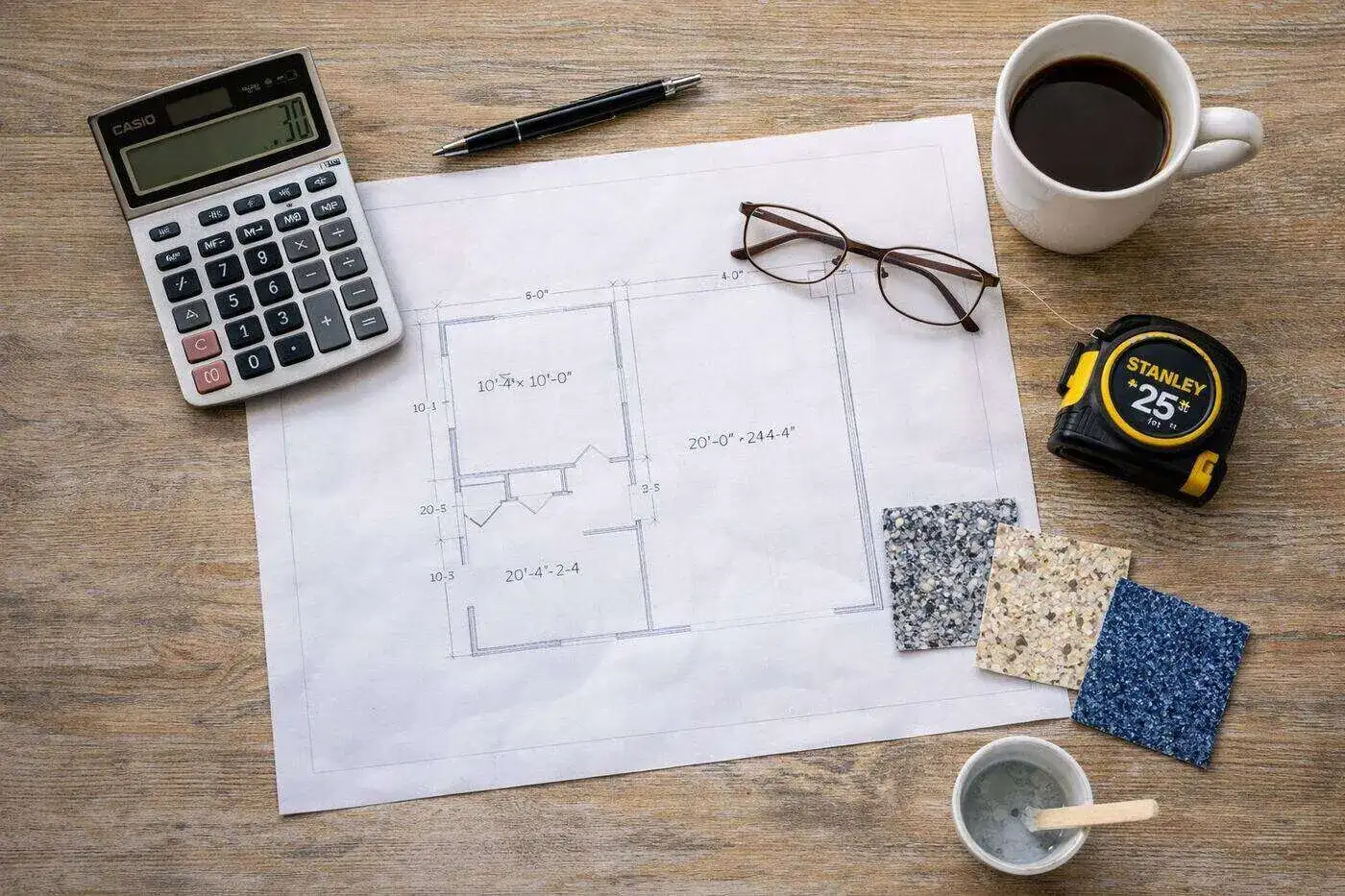
How Much Does Epoxy Flooring Cost in Lee County? (2026 Guide)
Real prices by finish and a typical 2-car garage total.
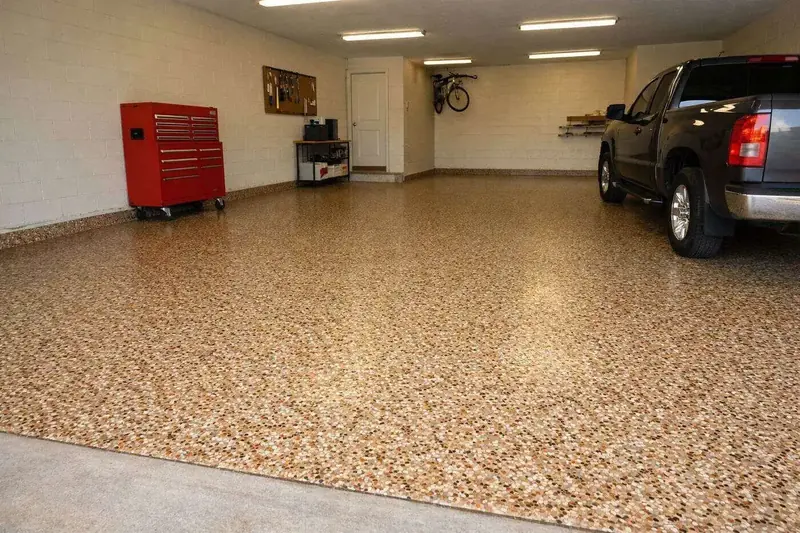
Epoxy vs. Polyaspartic: Which Is Better for a Lee County Floor?
Cure time, UV, humidity, and why the durable local floor uses both.
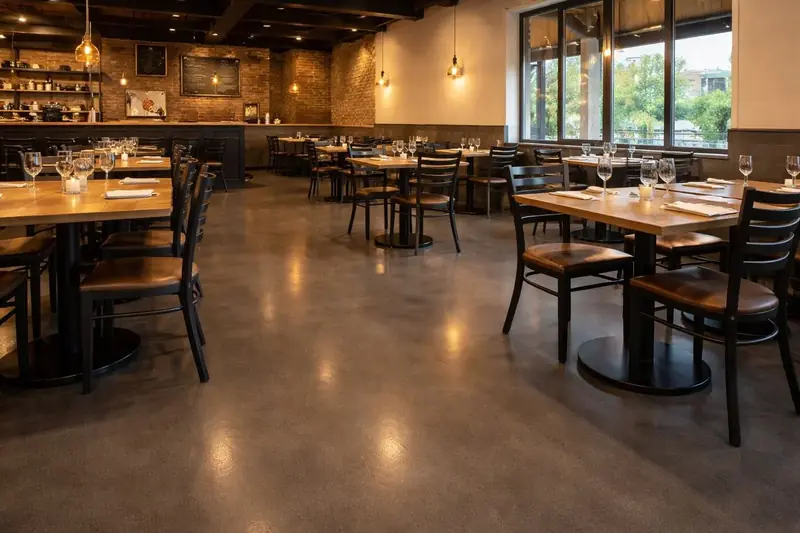
Commercial Epoxy Flooring in Lee County
Seamless, sanitary, slip-rated floors by industry.