Epoxy Flooring Services in Fort Myers & Lee County
One Southwest Florida crew, every coating system — each one specced for Gulf-coast salt air, post-Ian slab conditions, and the snowbird homes that sit empty through the wet season. Browse the services below and tap into the one that fits your space.
Google Rating 100%
5-Star Reviews Fort Myers
County-Wide Service Mon–Sun
Service Hours
Coating Systems Built for the Gulf Coast
Fort Myers sits at sea level on the Caloosahatchee, a few miles off the Gulf — so a floor here fights three things at once: salt-laden air that creeps in off the water, a shallow slab that wicks moisture year-round, and the storm load that put Cape Coral and Fort Myers Beach in Ian's path. Every service on this page begins with a slab moisture reading and is specced for those exact conditions. Find the space you need coated below.
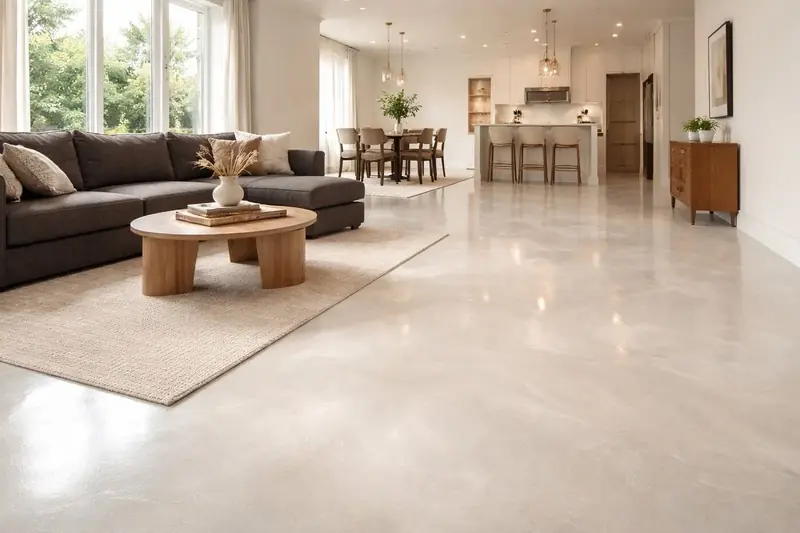
Residential Epoxy Flooring
Homes here are built for indoor-outdoor living — lanai entries, pool decks, and screened porches that drag in moisture and salt residue from every Gulf breeze and afternoon downpour. We coat those high-humidity spaces along with garages, kitchens, and laundry rooms in seamless finishes that wipe clean and hold up while a snowbird home sits closed through the summer.
- Vapor-barrier priming for the shallow water table under low-lying Lee County slabs
- Non-porous surface that shrugs off tracked-in sand, salt, and standing water
- Finishes that stay sealed during long away-from-home stretches between seasons
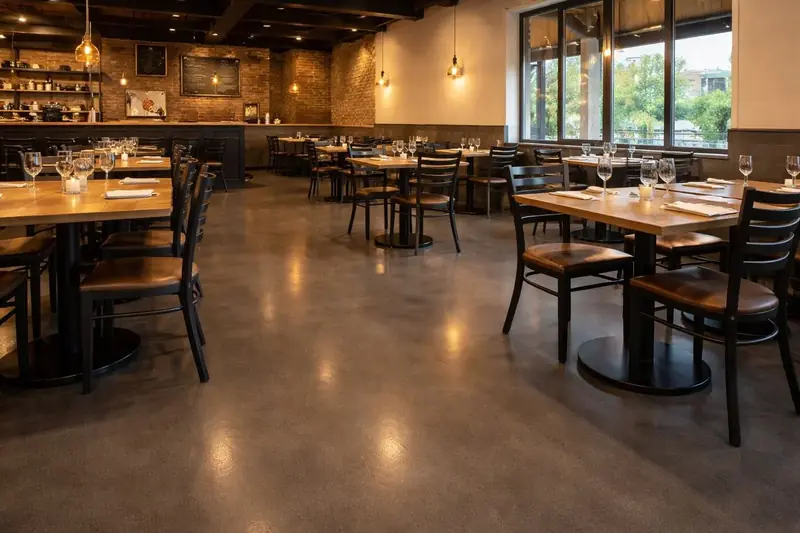
Commercial Epoxy Flooring
Southwest Florida runs on hospitality and seasonal commerce — the downtown River District restaurants, the shops along McGregor and the Cape Coral Parkway, marinas off the Caloosahatchee, and the medical and service offices that staff up when the winter population doubles. We install commercial-grade epoxy that stays slip-safe when patrons walk in wet from a storm and keeps its finish through a packed high season.
- Slip-resistant aggregate keyed to rain-tracked entries and wet foot traffic
- Off-season and overnight pours that work around the tourist-season calendar
- Custom branding with logos, colors, and zone markings
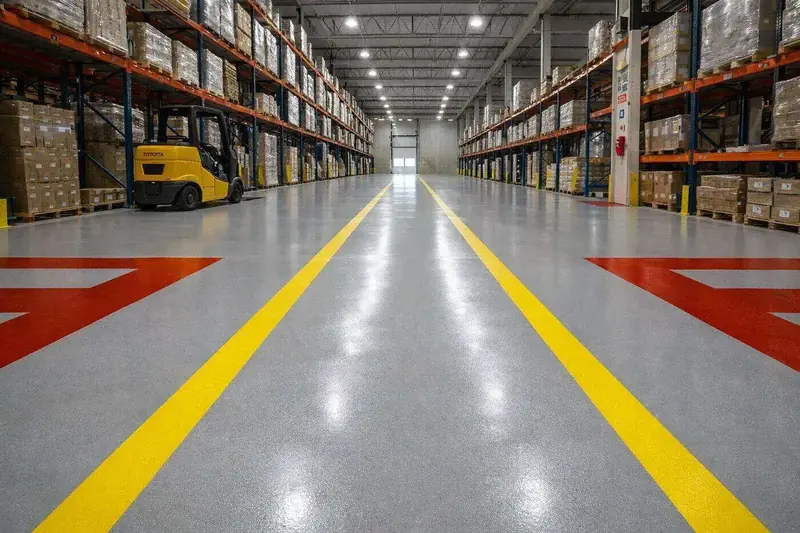
Industrial Epoxy Flooring
Lee County's freight and trade economy moves through the warehouse parks off I-75, the Alico Road and Treeline Avenue corridors, and the air-freight operations around Southwest Florida International. Distribution floors, fabrication shops, and plants in those zones get our chemical-resistant, forklift-rated systems — built for pallet-jack abuse and the corrosive bite of salt air that drifts inland off the Gulf.
- Chemical, impact, and abrasion resistance for heavy equipment
- Corrosion-rated topcoats for coastal and salt-exposed operations
- Phased pours that keep shipping and receiving running through install
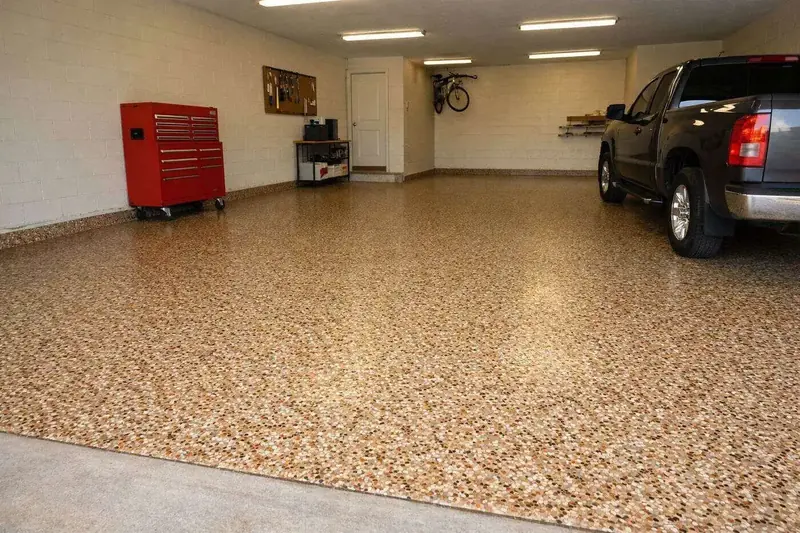
Garage Epoxy Flooring
The most-requested job we do here. An un-air-conditioned Fort Myers garage is the hottest, most humid room of the house — bare concrete sweats, sheds dust, and lets hot tires pull cheap big-box coatings right off the slab. Ours are diamond-ground in and engineered to stay put through a Gulf-coast summer, whether the home is lived in year-round or shut up till the owners drive back down.
- Hot-tire pickup resistant — no peeling through the long SWFL summer
- Full flake, metallic, and quartz systems available
- Typical 1–2 day installation for standard 2-car garages
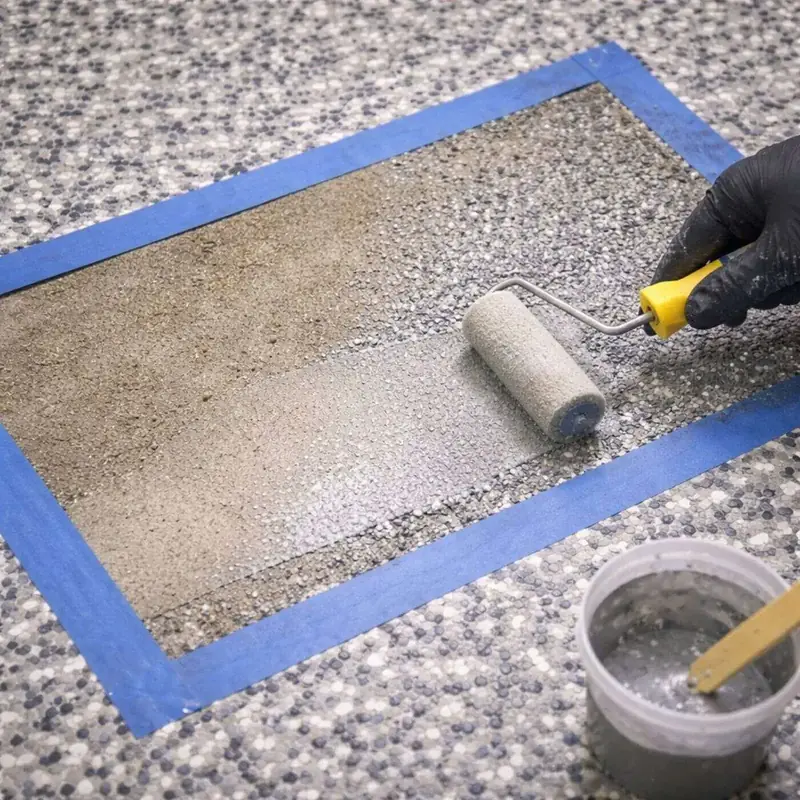
Epoxy Repair & Maintenance
Storm surge and flood water are a real part of life on the Caloosahatchee — and water that sits under or against a coating is the fastest way to lift it. We see plenty of floors that delaminated after a flood event or were rushed in by a storm-chasing crew. We read the slab, find why the old coating let go, and rebuild from the cause up instead of recoating over a problem.
- Post-flood moisture readings before any recoat goes down
- Patch repairs, full recoats, and topcoat refreshes available
- Maintenance plans built around the closed-up snowbird season
Why Fort Myers Homeowners Call Us
Salt air, a high water table, and hurricane season raise the bar on what a floor — and a flooring crew — has to deliver here. This is what we bring to it.
Specced for the Salt-and-Moisture Combo
Diamond-grind prep plus a slab moisture reading on every job — the only way a coating survives Lee County's sea-level humidity and salt load without lifting later.
Free On-Site Estimates
No surprise costs. We measure the space, test the slab, and give you an exact price with no obligation — handy when you're coordinating from up north.
Fort Myers Floor Gallery
Our gallery shows floors like the ones we install across Cape Coral, Estero, Bonita Springs, and the rest of Lee County — residential, commercial, and industrial.
A Local Crew, Not a Call Center
Our crew is based right here in Southwest Florida — not a franchise dispatcher three states away. Direct line, Call back in minutes during business hours.
A Warranty You Can Read
Written and specific — and it travels with the property if you sell. We explain what's covered, what's not, and how to file a claim. No fine print.