Industrial Epoxy Flooring in Lee County
Salt-air-resistant, forklift-rated epoxy and urethane cement systems for Southwest Florida warehouses, packing houses, and shops — coastal-grade slab prep that survives Lee County humidity, storm-season flooding, and round-the-clock traffic.
A Coast-Tough Floor for Southwest Florida Operations
An industrial floor a mile from the Gulf does not live the same life as one in a dry inland state. In Lee County, salt-laden air drifts inland off the coast and works its way under coatings at every crack and cold joint, accelerating rebar corrosion and slab spalling. Add subtropical humidity that rarely lets a slab fully dry, a water table that sits high beneath much of Cape Coral and the river basin, and you get the single biggest reason industrial coatings fail here: vapor pressure pushing up from below. We build for that first, before we talk about color or gloss.
The other hard truth of operating on the Southwest Florida coast is storm season. Between June and November, a single surge event or roof failure can put inches of standing water across a warehouse floor for days. A properly specified urethane-cement or moisture-tolerant epoxy system shrugs that off — it does not soften, lift, or harbor mold the way a thin garage-grade coating does — so you are pressure-washing and reopening, not demolishing and recoating. For packing houses, marine and boat-service shops, cold-storage rooms, and the produce and seafood handlers spread across Lee County, that resilience is the whole point.
There is also a rhythm to work down here that we plan around. A large share of the owners and facility managers we serve run seasonal operations — businesses that scale up for the winter snowbird population and slow through the wet summer. That summer lull is the ideal window to take a bay offline and recoat, and we phase installs so a floor is fully cured and back in service before the season ramps. Whatever the use — forklift-rated commercial traffic lanes, chemical-resistant processing rooms, ESD-controlled assembly areas, or high-traction maintenance bays — we match the system to the job and the calendar.
Running a retail, office, or hospitality space rather than a plant? See our commercial epoxy flooring service instead.
What a Coastal Industrial Floor Has to Survive
Salt air, storm-season water, and year-round humidity make Southwest Florida harder on floors than most of the country. Here is how our systems answer each.
100+
Chemical & Acid Resistant
Shrugs off acids, alkalis, solvents, oils, and fuels — plus the wash-down detergents and sanitizers a Gulf-coast packing house or seafood handler runs daily. Standard through novolac systems, matched to whatever your operation actually spills.
10,000+ lbs
Forklift & Heavy Machinery Rated
Takes the daily beating of forklifts, pallet jacks, and loaded racking without cracking, chipping, or peeling — and keeps holding through the high-volume winter season when a snowbird-driven operation runs flat out around the clock.
OSHA
OSHA Safety Compliant
Anti-skid aggregate and high-visibility coatings that hold their grip even when humidity leaves a film of condensation on the floor — a real hazard in unconditioned Southwest Florida warehouses. Slip resistance that meets or exceeds OSHA on every square foot.
Custom
Safety Line Marking
Lane striping, pedestrian walkways, hazard zones, equipment footprints, and emergency egress paths — including the storm-evacuation routes a Gulf-coast facility needs marked before hurricane season. Color-coded, bonded into the floor, and built to outlast painted-on lines.
ESD
Anti-Static Options
Conductive and dissipative ESD systems for electronics assembly, avionics and marine-electronics shops, and any space handling flammable or volatile material. Static control is doubly important in our dry winter months, when low indoor humidity lets charge build fast. Meets ANSI/ESD standards.
10–20 yrs
10–20 Year Performance
A coastal slab fights humidity, salt intrusion, and storm water its whole life — so the prep is what buys the years. Done right, an industrial system here runs 10 to 20+ years through machinery, chemicals, and heavy traffic, riding out hurricane seasons instead of needing a recoat after each one.
How coastal humidity affects durability →Our Coastal Install Process
Five steps tuned for a high-moisture, high-humidity slab. We phase the work around your season so a bay is cured and back in production before peak — not torn up when you need it most.
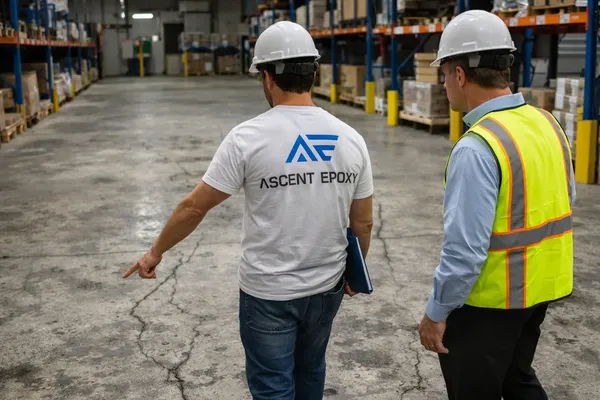
Facility Assessment
~Half dayWe walk the whole facility, probe slab moisture in multiple zones (it varies wildly across a coastal floor), check for salt-driven spalling and old joint failures, map your traffic and chemical exposure, and flag any low spots that pond during storm season. Schedule yours free.
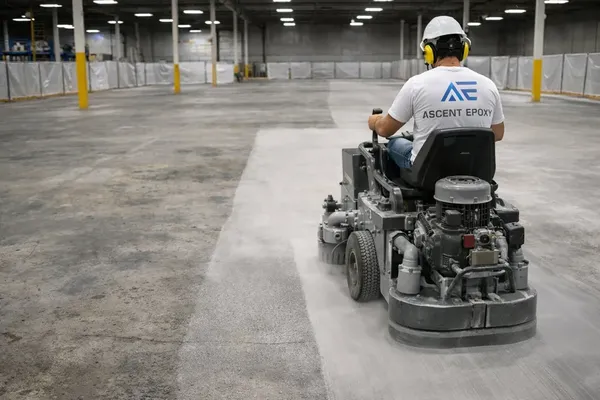
Industrial Slab Preparation
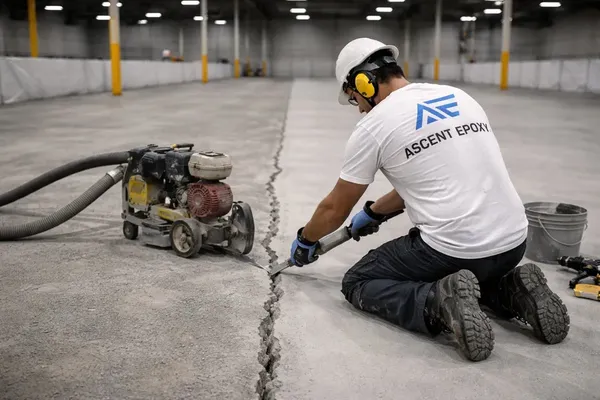
4–8 hrsDiamond grinding and shot blasting open the full surface to a CSP profile the coating can actually grip. On older coastal slabs we cut out salt-contaminated and spalled concrete, then rebuild cracks, joints, and dock edges so the repair is sound before a drop of resin goes down.
Primer & Moisture Barrier
2–4 hrsThis is the step that makes or breaks a Southwest Florida floor. Where our probes read high — common over the region's shallow water table — we lay down a moisture-mitigation barrier that holds back vapor pressure pushing up from below, then a chemically bonding industrial primer. Skip this and the slab will blister the topcoat off within a season; we don't.
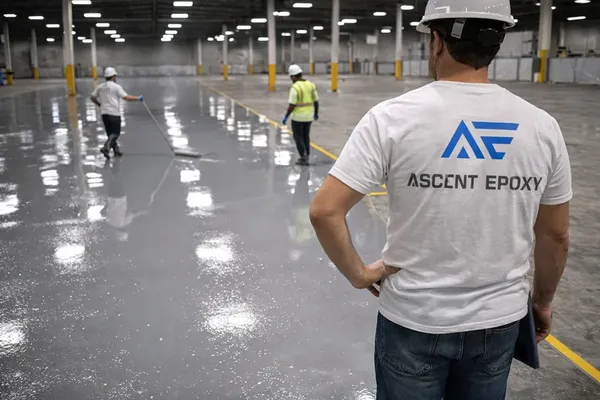
Epoxy System Application
1–3 daysWe build up the system you actually need — chemical-resistant, impact-rated, urethane-cement, or ESD — coat by coat. Lane striping, color-coded zones, storm-egress paths, and anti-slip aggregate for damp coastal floors all go in here, not as a later add-on.
Curing & Handoff
3–7 daysHumidity changes how a coating cures, so we monitor temperature and dew point through the cure rather than just watching the clock. We confirm hardness, adhesion, and chemical resistance before you load the floor, and hand your team care guidelines covering wash-down chemistry and what to do if storm water gets in.
Ready to Start? Step 1 Is Free.
Schedule your no-obligation consultation and see finish samples in your space.
Industrial Epoxy Projects
Real installations in Southwest Florida warehouses, shops, and processing facilities.
Systems Built for the Gulf Coast
Three workhorse systems for Southwest Florida industry — chosen by what your floor faces: thermal shock and wash-downs, forklift abuse, or hazardous-material containment.
Urethane Cement Flooring
When a floor sees water all day, urethane cement is the answer epoxy can't always give. It tolerates being applied over slabs that still carry moisture — a real advantage on Southwest Florida's never-quite-dry concrete — and it laughs off the thermal shock of hot wash-downs hitting a cool floor, plus the daily soaking of caustic sanitizers.
That makes it the natural pick for the region's seafood and produce packing houses, fish and stone-crab processors, commercial kitchens, and cold-storage rooms — anywhere acids, brines, and constant moisture would eat a standard coating alive. It returns to service in about a day, so a seasonal operation can recoat a room in the off months and be running again fast.
Warehouse Floor Coatings
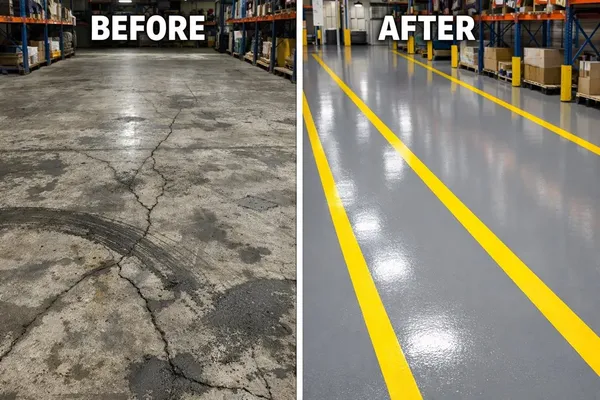
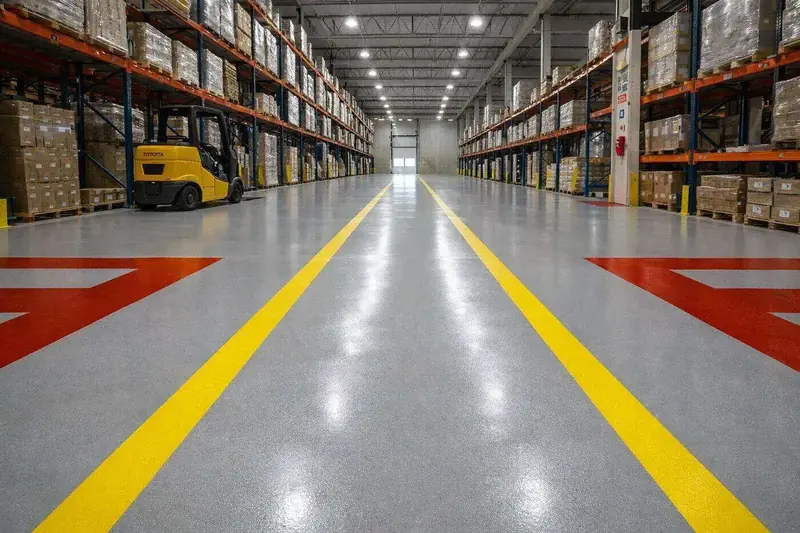
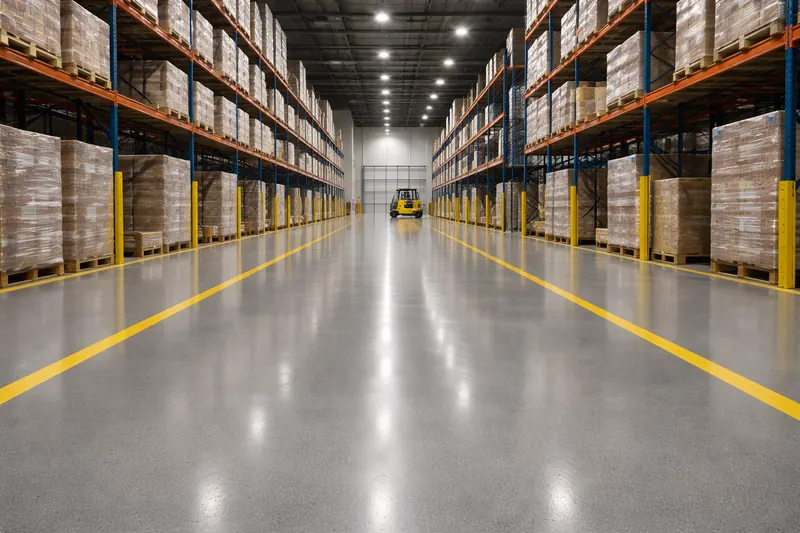
Few surfaces get worked harder than a distribution-warehouse floor: forklifts pivoting on the same turn points, pallet jacks dragging steel across concrete, racking legs driving thousands of pounds into a few square inches. Leave that slab bare in Lee County's humidity and it dusts, crazes, and pits faster than most managers budget for — and salt air at coastal docks only speeds the decay.
We answer with a high-build epoxy and an abrasion-resistant topcoat sized to your traffic, then bake the safety work right in — aisle striping, pedestrian lanes, hazard zones, and dock-edge color coding. For the freight and storage facilities clustered along I-75 and the Alico Road and Gateway commerce districts, we phase the install bay by bay so nothing stops shipping while we coat.
Secondary Containment Areas
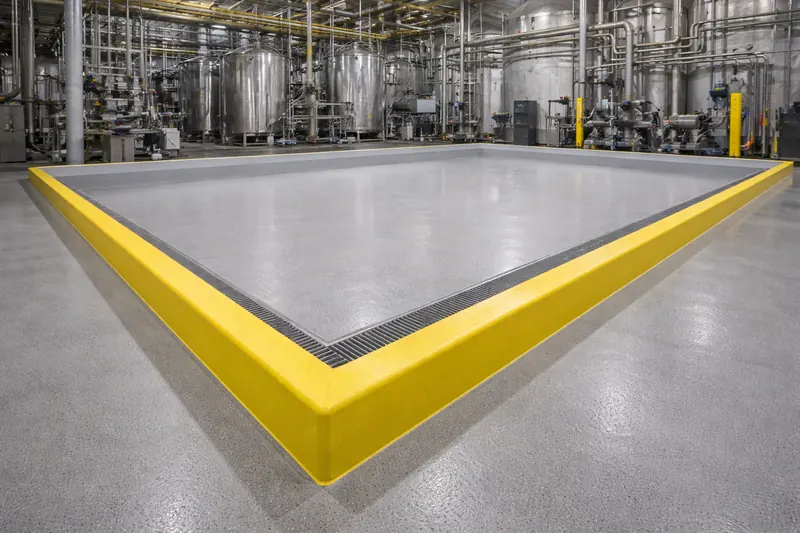
If your facility stores fuels, agricultural chemicals, or industrial solvents, secondary containment is the law — and on the Gulf coast it carries real environmental stakes. A spill that escapes here can reach the Caloosahatchee, the canal network, and tidal wetlands fast, which is exactly why EPA, OSHA, and Florida DEP rules apply to the marinas, fuel depots, equipment yards, and ag-supply operations across Lee County.
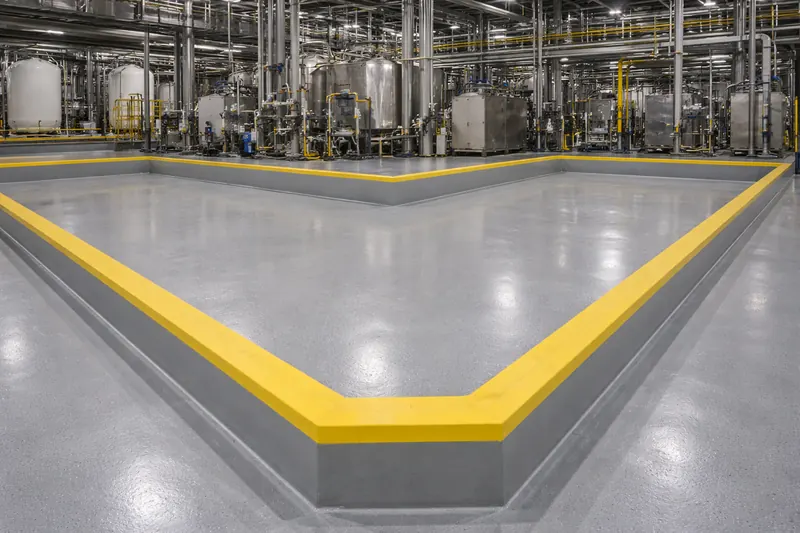
We build chemical-resistant containment with integrated curbing and berms that keep a release off the ground and out of storm drains — a containment system that also helps keep surge and flood water from carrying contaminants out during a storm. Berms are sized to hold 110% of the largest vessel per federal and state code, and the coating stands up to acids, bases, fuels, and organic solvents alike.
Rated 5.0★ — Lee County Reviews
Real reviews from real Lee County clients — verified on Google.
"The floor looks fantastic! Thanks!"
"Super happy with how my epoxy floor came out. Smooth finish, no weird bubbles, and it actually makes cleaning easier. Worth every bit."
"Our patio was completed this spring, and it looks far better than we had anticipated. Despite the intense heat in Florida, the color combination looks great and complements the house."
Industrial Epoxy Flooring FAQs — Lee County
Common questions about industrial epoxy flooring for Lee County facilities.
We install industrial epoxy flooring in a wide range of facilities across the Lee County metro area, including:
- Warehouses and distribution centers
- Manufacturing plants
- Chemical processing facilities
- Food and beverage processing plants
- Maintenance bays and service shops
- Control rooms and clean environments
Our systems are engineered to handle the specific demands of each facility type, from chemical resistance in processing plants to impact resistance in high-traffic warehouses.
Lee County's average 74% humidity is critical for large industrial slabs. Moisture trapped beneath the coating causes delamination and peeling, and on expansive warehouse floors, even small moisture variations can affect thousands of square feet.
We perform comprehensive moisture testing across the entire slab using calcium chloride and relative humidity probe methods. When readings are elevated, we apply moisture-mitigating primers and vapor barrier coatings before the epoxy system goes down. We also schedule installation windows around optimal humidity conditions to ensure a lasting bond.
Yes. Our industrial epoxy systems are formulated with chemical-resistant resins that withstand exposure to a wide range of substances, including acids, alkalis, solvents, petroleum products, oils, and fuels.
We offer various chemical resistance ratings depending on the specific chemicals present in your facility. Standard epoxy handles oil, grease, and mild chemicals. For facilities that deal with concentrated acids and harsh solvents, we install novolac epoxy systems with the highest chemical resistance ratings available.
Yes. We install OSHA-compliant safety line marking as part of our industrial epoxy flooring systems. This includes:
- Pedestrian walkways
- Forklift traffic lanes
- Hazard zones and restricted areas
- Equipment placement boundaries
- Emergency exit paths
- Color-coded area designations
All markings are applied with durable epoxy paint that bonds directly to the floor system and withstands heavy daily traffic without fading or peeling.
Industrial epoxy installation typically takes 3 to 7 days depending on the facility size, condition of the existing concrete slab, and complexity of the coating system required.
For larger facilities, we offer phased installation that allows you to keep portions of your operation running while we work on other sections. This minimizes downtime and keeps your production schedule on track. We provide a detailed project timeline during the estimate phase so you can plan around the installation.