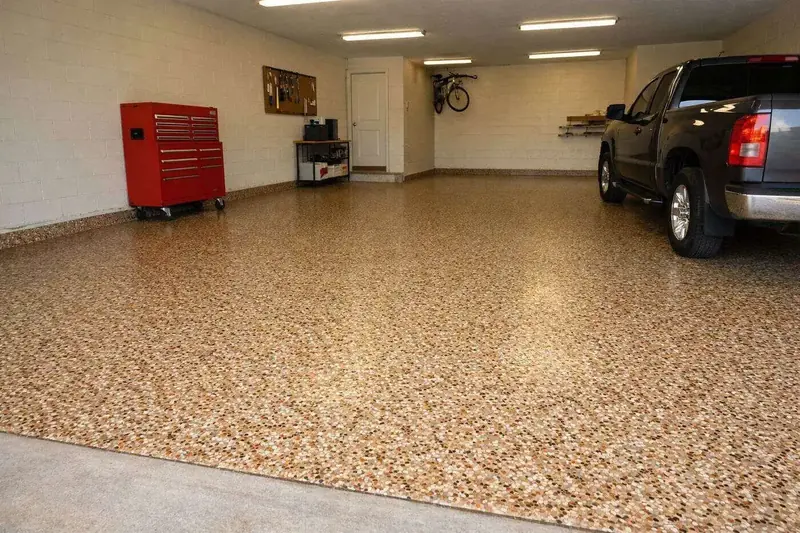
For a Southwest Florida garage, the longest-lasting floor is rarely epoxy alone or polyaspartic alone. It is the two stacked together: an epoxy base coat that grips the slab and builds thickness, sealed under a UV-stable polyaspartic topcoat that handles Lee County's sun, salt air, and humidity. The "which one is better" question misses the point, because here the smart spec uses both.
If you have been collecting quotes for a garage floor coating in Fort Myers, Cape Coral, Estero, or Fort Myers Beach, you have probably heard two contractors contradict each other within the same week. One insists epoxy is the proven standard and everything else is hype. The next says polyaspartic is the only coating that survives a Gulf-coast garage. They are each half right, and each is describing one layer of a system that works best when you stop treating the two products as rivals.
It is a question that comes up constantly in this market right now. A lot of Lee County homeowners are still finishing repairs from Hurricane Ian, gutting and recoating garages and lanais, and weighing snowbird-season timelines where the house sits empty for months. This guide walks through what epoxy and polyaspartic each actually are, where each one earns its place, how they compare on the factors that matter on a coastal slab, and why the climate here tips the answer toward a combined floor. Want a real number for your slab instead? Call (239) 320-7135 for a free estimate. Otherwise, read on.
What Epoxy Actually Is
At its core epoxy is a two-part thermoset. A resin and a hardener get blended, the chemistry kicks off, and what was liquid hardens into a rigid, plastic-like film fused to the concrete underneath it. Two things make epoxy valuable: how aggressively it bonds and how much body it adds. Spread over a freshly diamond-ground slab, it works down into the opened pores of the concrete, anchors there, and then stacks into a thick, seamless coat that can bridge minor pitting and surface flaws and leave behind a genuinely tough floor.
Inside a real floor system, that makes epoxy the foundation layer. It does the gripping, it carries the thickness that gives the floor its substance, and it acts as the bed the decorative layer sits in. On the flake floors so common in Lee County garages, the color chips are cast into the wet epoxy and lock in place as it sets. Most of a floor's actual measured thickness comes from this layer, which is exactly why epoxy belongs at the bottom of the stack rather than on top.
The weak spot is asking epoxy to be the exposed surface in a climate like Southwest Florida's. Left bare, a standard epoxy finish cures slowly, gets fussy about humidity while it is curing, and ambers and chalks once the Gulf-coast sun hits it. None of that is a knock on the product. It just confirms what epoxy is built to be here: a base coat, not the finish.
What Polyaspartic Actually Is
Polyaspartic belongs to the polyurea family, an aliphatic coating chemistry developed well after epoxy and aimed squarely at being a high-performance wear layer. If epoxy is about gripping and building, polyaspartic is about speed and protection. It sets fast, often in the range of one to two hours, which is why a crew can finish a floor and hand the space back the same day. It is also a lot more relaxed about the conditions that trip epoxy up, curing dependably across a wider band of temperature and humidity.
For Southwest Florida, the property that matters most is UV stability. A good polyaspartic stays clear and holds its color under direct sun instead of yellowing and going dull the way a bare epoxy surface does after a couple of seasons. Alongside that it is highly abrasion resistant and chemically resistant, brushing off hot tires from a daily driver, dropped beach gear and tools, tracked-in salt, and the cleaners and fluids that end up on any working garage floor.
The catch is body. Polyaspartic lays down as a thinner film than epoxy and costs more per gallon, so building an entire floor out of it alone runs the price up while sacrificing the cheap thickness epoxy delivers. That is the whole reason it works best as the topcoat rather than the full floor: it seals and finishes the system but relies on the layer below it to supply the build.
Epoxy vs. Polyaspartic: Head to Head
Set them next to each other and it stops looking like a contest. Read the table as base-layer epoxy versus a polyaspartic wear layer, not as two ways to build the same floor, and the reason installers pair them rather than pick one becomes obvious. Here is how they stack up on the factors that actually decide how a Lee County floor holds up.
| Factor | Epoxy | Polyaspartic |
|---|---|---|
| Cure time | Slow; about 12–24 hours per coat, several days to fully harden | Fast; about 1–2 hours, same-day foot traffic |
| UV stability / ambering | Ambers and chalks in sun unless protected | UV-stable; resists yellowing and fading |
| Humidity tolerance | Can blush or cure poorly in high humidity | Cures reliably across a wider humidity range |
| Abrasion resistance | Good; durable under normal use | Excellent; very hard, wear-resistant surface |
| Cost per sq ft | Lower per coat; cost-effective build | Higher per coat; premium material |
| Look / finish | Thick, glossy build; hosts flake well | Clear, hard, color-true finish layer |
| Ideal use | Base coat for adhesion and thickness | UV-stable, fast-cure topcoat |
Run your eye down the rows and the same answer keeps repeating. Epoxy takes build and cost; polyaspartic takes cure speed, UV, humidity, and surface hardness. Each one is strongest precisely where the other is weakest, which is why the right spec on a coastal slab puts one over the other rather than forcing you to pick a winner.
Not Sure Which System Your Floor Needs?
Tell us about your slab and how you use the space. We will recommend the right system for South Florida and give you a real number, free.
Why the Topcoat Matters So Much in Lee County
Most coating advice online is written for a dry, mild slab somewhere up north, where a plain epoxy topcoat can coast along for years. Southwest Florida is the opposite environment, and the topcoat is the first place that shows. Four conditions specific to a Gulf-coast slab gang up on the wrong finish, and every one of them argues for polyaspartic on top.
Coastal salt air and waterfront exposure
Lee County is laced with canals, and a huge share of homes in Cape Coral, Fort Myers Beach, Iona, and the islands sit on or near salt water. That salt-laden air works on a floor's edges, thresholds, and open bays, and over time it chews through weaker finishes faster than an inland slab ever sees. A tough, UV-stable polyaspartic wear layer shrugs that exposure off far better than a bare epoxy surface, which is why it matters most on open-bay garages and canal-front and beach-side properties.
Relentless sun and ambering
This is the big one. Sub-tropical UV ambers and chalks any coating that is not UV-stable, and it does it quickly on a garage floor that catches daylight every time the bay door rolls up, or on a sun-washed lanai or interior. A bare epoxy surface yellows and goes flat under that load. A polyaspartic topcoat stays clear and color-true, so the floor still reads new after a string of Florida summers instead of looking tired and faded.
Humidity and a warm slab
Humidity here hovers around 75 percent and slab temperatures stay high nearly all year. Slow-curing standard epoxy can blush, cloud, or simply fail to set cleanly in that kind of air, and it is most exposed to the problem as a thin top layer. Polyaspartic was engineered to cure reliably in exactly this warm, sticky climate, which is why local crews lean on it for the finish coat.
Storm recovery and moisture from below
After Hurricane Ian, a lot of Lee County garages and ground-floor spaces were stripped and recoated, and many sit on slab-on-grade pours where moisture vapor pushes up from the ground. That vapor drive is a prep-and-primer problem handled underneath the floor, not by the topcoat, but the finish above still has to survive the heat and sun for years for the whole system to pay off. Get the moisture mitigation right below and the UV-stable polyaspartic right on top, and the floor lasts. Put simply, the topcoat carries most of the burden of surviving the Lee County environment, and that is the exact job epoxy is worst at and polyaspartic was made for.
The Hybrid System (and What It Costs)
Stack the lessons above and you land on the floor most Lee County garages should actually be getting. There is nothing exotic or gimmicky about it; it is just each material doing the one thing it is best at. In sequence: diamond-grind the slab to a clean mechanical profile, address moisture mitigation if the slab calls for it, lay the epoxy base coat for adhesion and thickness, broadcast color flake into that wet base for the look and the grip, then lock everything in under a clear, UV-stable polyaspartic topcoat. Epoxy bonds and builds, the flake handles the looks, the polyaspartic does the protecting.
On price, expect a finished epoxy floor in Lee County to run somewhere around $5 to $12 per square foot installed depending on the finish, with most flake garage jobs landing in the middle of that band. The polyaspartic topcoat upgrade adds roughly $1.50 to $3.00 per square foot over a plain epoxy topcoat on the same flake spec. For a standard two-car garage in the 400-to-500-square-foot range, a quality flake floor here generally comes in around $2,000 to $4,500 all in, covering full prep, crack and joint repair, the epoxy base, the flake broadcast, and a clear protective topcoat; put the polyaspartic wear layer over that flake and the same bay lands nearer $4,000 to $5,500. That upgrade is the part carrying the most weight in keeping the floor alive on a Gulf-coast slab, which is why we put it on nearly every residential job in this market. Every estimate also includes a free ASTM slab-moisture test, a $200-to-$400 value, because on Southwest Florida slabs the moisture reading is what decides whether a coating sticks.
For the full rundown on finishes, garage totals, and the local factors that swing a quote, see the full Lee County cost guide. It breaks down solid-color, flake, metallic, and quartz pricing next to the moisture and prep realities specific to Southwest Florida.
Which Should You Choose?
For nearly every Lee County garage and the bulk of residential floors, the answer is the hybrid: an epoxy base under a polyaspartic topcoat. It is the setup that balances body, cost, looks, and the UV and humidity protection this climate insists on, and it is what goes down on the large majority of the homes we coat. If one line from this article sticks, let it be that one.
There are a few narrower situations where going all-in on a single material makes sense:
- Pure polyaspartic earns its keep where turnaround is everything, usually quick-flip commercial spaces that cannot give up several days to cure. The same-day return is the payoff; the cost is a thinner build and a higher material price.
- Pure epoxy as a standalone finish is seldom the right move on a Southwest Florida slab, since a bare epoxy surface ambers and wrestles with the humidity here. Where it can fit is a shaded utility or storage space out of the sun, on a tight budget, where UV simply is not in play.
- The hybrid is the default for everything else, which around here is most floors, because it lets each material work where it is strongest.
The honest read is that "epoxy versus polyaspartic" is usually a false choice dressed up as a debate. The decision that actually matters is how to combine the two and how much build the system needs for your slab and how you use the space, especially on a seasonal or snowbird home that may sit closed for months at a stretch. That is a conversation to have with an installer who tests your concrete and specs the floor for the Gulf coast, not one who is just trying to sell you a single product.
Frequently Asked Questions
Is polyaspartic better than epoxy?
Neither one wins outright, because they are built for different roles. Epoxy makes the better base coat: it grips prepped concrete hard and lays down real thickness. Polyaspartic makes the better topcoat: it sets fast, holds up to UV, and cures in humidity. On a Southwest Florida slab the floor that lasts uses both, an epoxy base sealed under a polyaspartic topcoat, instead of betting on just one.
Can you put polyaspartic over epoxy?
Yes, and on the Gulf coast that layering is exactly the point. The epoxy base goes down first for adhesion and build, color flake gets broadcast into it, and a clear polyaspartic topcoat locks the whole thing in. The polyaspartic shields the epoxy from sun, abrasion, salt, and chemicals and supplies the UV stability epoxy does not have on its own.
Does polyaspartic yellow in the sun?
A quality polyaspartic is UV-stable and resists the yellowing and ambering that bare epoxy shows once sunlight hits it. That counts for a lot in Lee County, where year-round sun fades any coating that is not UV-rated. Plain epoxy topcoats amber and chalk under that exposure, which is the main reason crews here finish a floor with polyaspartic instead.
Is polyaspartic worth the extra cost in Southwest Florida?
In Lee County, almost always. The upgrade runs roughly $1.50 to $3.00 per square foot over a plain epoxy topcoat, and for that you get UV stability, humidity tolerance, and tougher abrasion resistance. Between the heat, the sun, the coastal salt air, and humidity near 75 percent, that topcoat is what stops the floor from ambering, blushing, and wearing out early.
How long does a polyaspartic topcoat take to cure?
A polyaspartic topcoat usually cures in about one to two hours and takes foot traffic the same day, with vehicles often back on it the next. Epoxy is far slower, commonly wanting 12 to 24 hours per coat and several days to fully harden. That quick turnaround is why polyaspartic fits fast-flip commercial floors around Fort Myers so well.
Which lasts longer, epoxy or polyaspartic?
It comes down to conditions, but on a Lee County slab the hybrid outlasts either one by itself. Bare epoxy ambers and wears faster under the sun and humidity, while a thin standalone polyaspartic surrenders some of the build epoxy supplies. An epoxy base protected by a UV-stable polyaspartic topcoat pairs body with durability for the longest service life in this climate.
Get Your Personalized Lee County Epoxy Quote
This guide hands you the materials and the logic behind them, but the right spec for your floor still comes down to your slab, your sun exposure, your proximity to salt water, and how the space gets used. At Ascent Epoxy Fort Myers, every estimate opens with a real look at your concrete, an ASTM moisture test, and a straight conversation about which system fits, almost always a flake floor with an epoxy base and a UV-stable polyaspartic topcoat specced for the Gulf coast.
Ready to start? Call us at (239) 320-7135 or request a free quote online. We serve Cape Coral, North Fort Myers, Fort Myers Beach, San Carlos Park, Estero, Bonita Springs, Gateway, Iona, Lehigh Acres, and communities across Lee County.
Related Articles
How Much Does Epoxy Flooring Cost in Lee County? (2026 Guide)
Real prices by finish, a typical 2-car garage total, and local cost drivers.
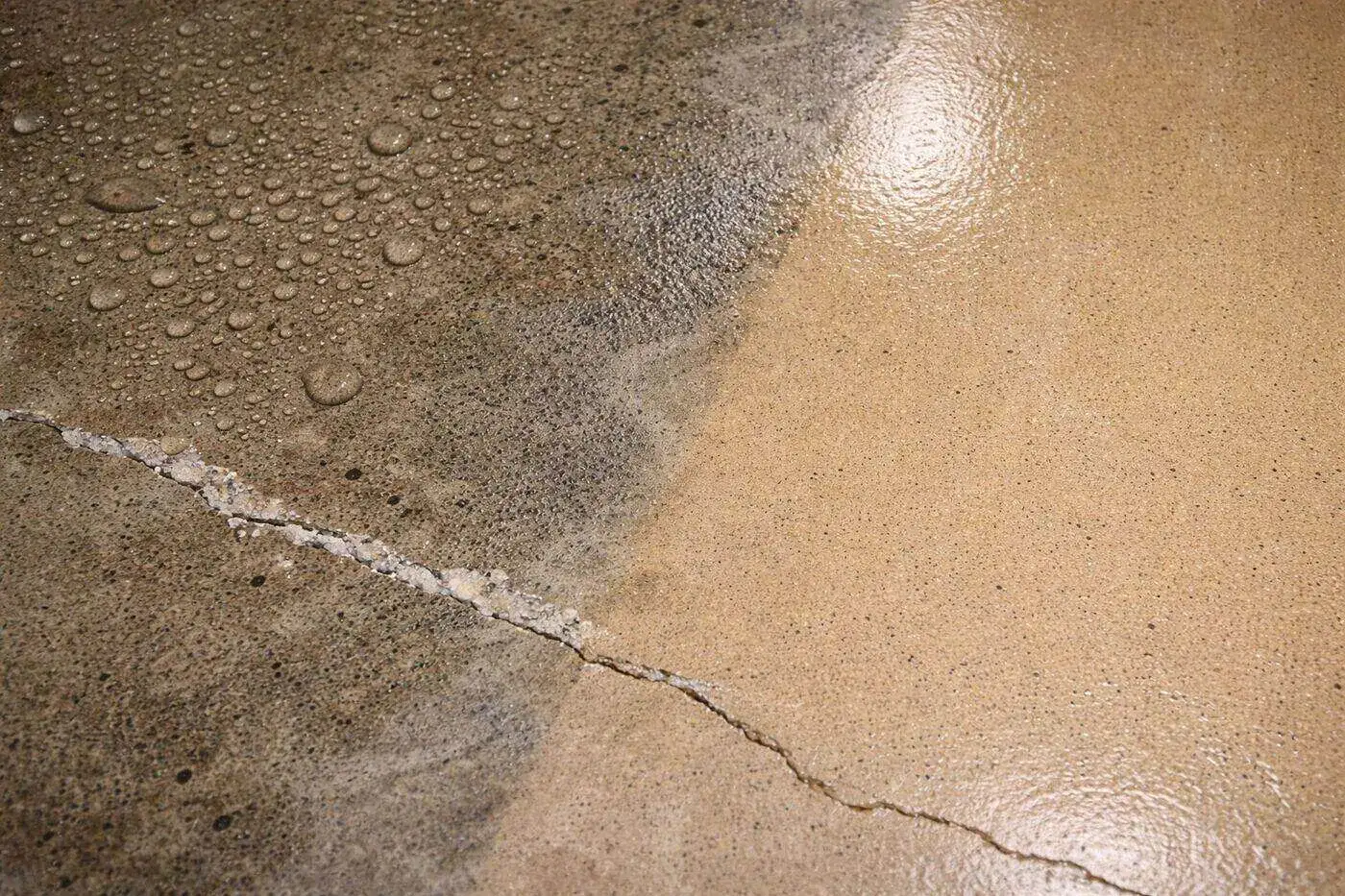
Why Epoxy Floors Fail in Lee County — and the Moisture Test That Prevents It
The high water table, MVT testing, and what to ask before you sign.
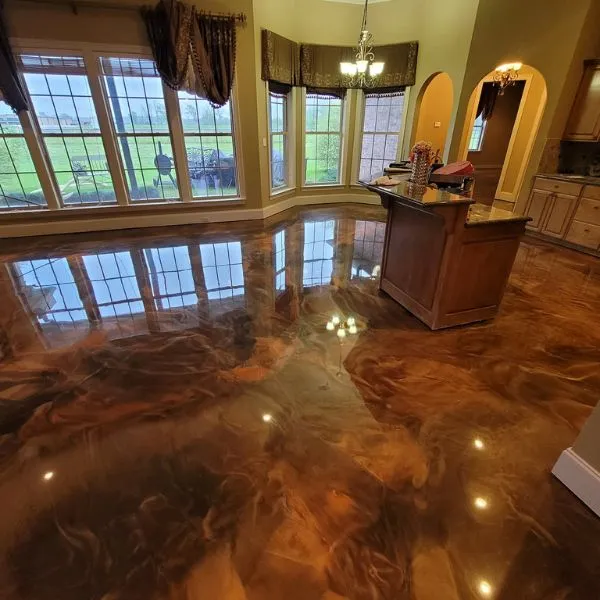
Metallic, Flake & Quartz: Epoxy Floor Design Styles in Lee County
How the decorative finishes compare and how to keep colors true in Florida sun.