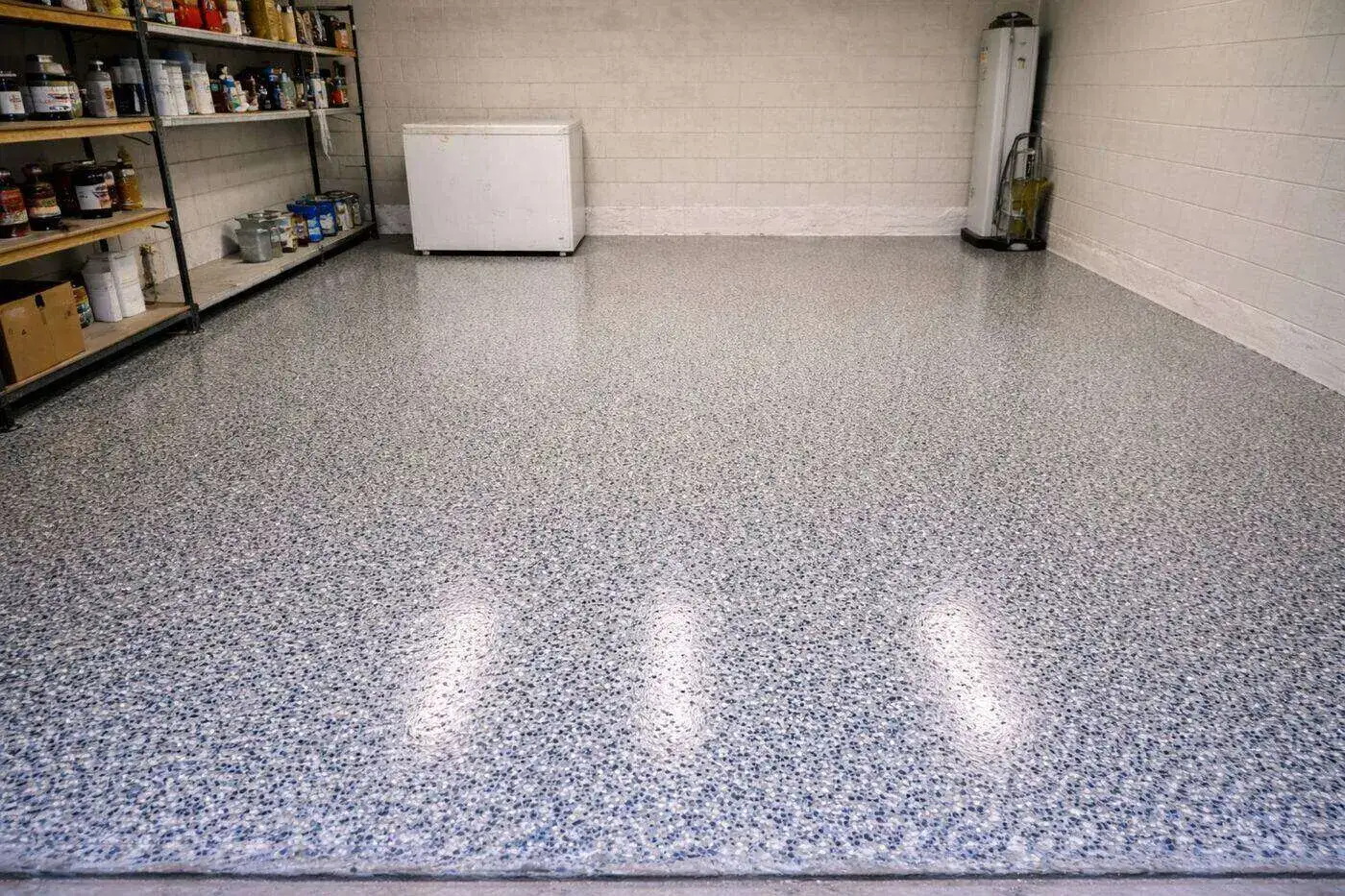
For a Southwest Florida home with a sound slab, a professionally installed epoxy floor is almost always worth it — a 2-car garage flake system runs roughly $2,000 to $4,500 here, or $4,000 to $5,500 with a polyaspartic topcoat over it, and holds up for 10 to 20 years, which pencils out to a few hundred dollars a year for a sealed, salt-resistant surface. Where it stops being worth it is a big-box kit poured over an untested Cape Coral slab during the wet season; in this coastal climate that floor often peels inside a year.
Lee County throws three things at a garage floor that drier parts of the country never deal with: coastal salt air drifting in off the Gulf, the post-hurricane reality of a garage that doubles as a staging and clean-up zone, and a lot of homes that sit empty for months while snowbirds head north. Whether epoxy earns its money here is really a question of how it handles those three pressures — not a generic flooring debate. So this article answers it through a Southwest Florida lens.
Below you will find the upsides that actually matter on the Gulf Coast, the downsides we would rather you hear from us than discover later, an honest side-by-side against tile and polished concrete, and the specific situations where we would tell you to wait. If you would rather just get a number for your slab, call our crew at (239) 320-7135 for a free, no-pressure estimate.
The Case For Epoxy: The Real Pros
The reasons epoxy wins in Cape Coral, Estero, and Fort Myers Beach garages are not the glossy-brochure ones. They are the practical, climate-driven benefits that show up after the first wet season and the first storm. Here is what you are actually paying for on the Gulf Coast.
It seals the slab against salt-laden air. Living within a few miles of the water means salt is in the air year-round, and unsealed concrete slowly wicks it in. A bonded epoxy or polyaspartic film puts a non-porous barrier between that salty, humid air and the slab, so the surface does not pit, dust, or stain the way bare coastal concrete does. This is the benefit most homeowners underrate until they see what a neighbor's uncoated garage looks like after a few summers.
It survives the jobs a Southwest Florida garage actually does. Down here the garage is the hurricane-prep room and the post-storm cleanup zone. It stores generators that leak fuel, soaks up dragged-in storm debris, takes the weight of stacked shutters and water cases, and gets hosed out after the mess. A properly ground-and-coated floor shrugs all of that off — dropped tools, dragged equipment, hot tires, fuel and bleach — and keeps doing it for 10 to 20 years. Spilled gas, brake fluid, and pool chemicals bead on top instead of soaking in and staining.
It is built for the snowbird gap. A lot of Lee County garages sit closed up for months while owners are up north. A sealed, seamless floor does not dust, mildew, or develop the musty stained look that a damp, unsealed slab gets while a house is shut up over the summer. You come back to the same clean floor you left.
It cleans with a hose, not a scrub brush. One seamless surface, no grout lines, no pores. After a storm or a season away you rinse it down and it is done — a real advantage when sand, rain, and humidity are constant.
It upgrades how the home shows — which matters in this market. Southwest Florida has a steady churn of buyers relocating and second-home shoppers, and a clean flake or metallic floor reads instantly as a maintained, move-in-ready property rather than bare or salt-stained concrete. A full flake broadcast also hides minor cracks and patches in the slab, and the glossy topcoat bounces light so the space feels brighter without adding fixtures. It is a relatively low-cost upgrade that makes an outsized first impression at a walkthrough.
The Honest Cons
No floor is perfect, and the contractors who pretend otherwise are the ones whose floors fail. Here is the straight version, with the Southwest Florida wrinkles spelled out.
The slab moisture problem is real, and it is worse near the coast. This is the con that matters most in Lee County. Much of Cape Coral, North Fort Myers, and the canal-front neighborhoods sit on a high water table, so the slab quietly pushes moisture vapor upward year-round. Coat over a slab like that without a moisture test and a mitigation primer and the floor can bubble and delaminate from underneath — not because the product was bad, but because vapor pressure peeled it off the concrete. Skip the test and you are gambling against the geology.
You are paying for a system, not a color. A real epoxy or polyaspartic system runs about $5 to $12 per square foot installed here, so a 2-car garage flake floor typically lands in the $2,000 to $4,500 range and nearer $4,000 to $5,500 once a polyaspartic wear layer goes over the flake, while metallic finishes run higher at roughly $9 to $14 per square foot. A bucket of garage paint is a fraction of that. The gap is real, and it buys grinding, crack repair, moisture mitigation, and a topcoat built for the climate — not just a coat of color.
Prep is the whole job, and it is invisible until it fails. The floor is only as good as what happens before the color goes down: a full diamond grind, crack repair, and moisture testing — never a quick acid wash. Skipped prep is the single biggest reason coatings fail, and you cannot see the shortcut until the floor lifts a year later.
It is a bad DIY bet in this climate specifically. Plenty of dry-climate garages forgive a weekend kit. The Gulf Coast does not. The same humidity, heat, and high water table that make professional moisture testing necessary are exactly what defeat a big-box kit applied without grinding or a vapor barrier. When a DIY floor peels here, it has to be ground off and redone properly — so you pay twice.
Smooth gloss is slick when wet. A glassy topcoat can be slippery once water or tracked-in rain hits it. The fix is simple — an anti-slip additive or a textured flake or quartz broadcast — but it has to be specified up front, which in a rainy coastal market we treat as the default, not an upsell.
Plan for cure time, and plan around storm season. Installation is not instant; the space is out of use through prep, coating, and cure, which can mean a few days before you walk on it and longer before you park. Polyaspartic systems shorten that window, which is part of why we lean on them here — but you also want to schedule the work outside an active storm watch, because you cannot pour a floor with a tarped-up open garage and incoming weather.
It will not save a failing slab. Epoxy is a coating, not a structural repair. If the concrete is spalling badly, heaving, or cracking apart, a coating fails right along with it. The slab has to be sound first.
Epoxy vs. the Alternatives
Epoxy is not the only way to finish a concrete floor, and the honest test of whether it is worth it is to set it beside the realistic alternatives for the same slab. The column that matters most on the Gulf Coast is moisture tolerance — a finish that cannot handle a high-water-table coastal slab is a non-starter here no matter how it scores everywhere else. Here is how the four common choices stack up for a Lee County garage or finished space.
| Epoxy Coating | Porcelain / Ceramic Tile | Polished Concrete | DIY Paint / Roll-On Kit | |
|---|---|---|---|---|
| Upfront cost | Moderate ($5–$12/sq ft; 2-car flake $2,000–$4,500, or $4,000–$5,500 with a polyaspartic topcoat) | Higher (material + skilled labor) | Moderate | Lowest |
| Lifespan | Long (10–20 yrs, pro install) | Long (decades, if grout maintained) | Long | Short (often under 2 yrs) |
| Durability | High — seamless, impact and abrasion resistant | Hard but can chip and crack on impact | Very high | Low — peels and wears fast |
| Maintenance | Very low — wipe or hose clean | Higher — grout lines stain and need scrubbing | Low — periodic reseal | High — frequent touch-ups |
| Moisture tolerance (coastal SW FL) | Excellent with mitigation primer + testing | Good, but grout can trap moisture | Good — it is the slab itself | Poor — lifts on damp slabs |
| Look / customization | Wide — solid, flake, metallic, quartz | Wide tile selection, visible grout | Limited — shows the concrete | Basic — solid color only |
| Best for | Garages and finished spaces wanting durability + looks | Living spaces wanting a specific tile look | Industrial or minimalist modern look | Tight budgets and short-term fixes |
The pattern is clear once you read it through a coastal lens. Tile still wins inside the house when you want a specific decorative look, and polished concrete wins for a hard, minimalist, industrial surface where you do not mind it showing the slab. A roll-on kit wins on price alone — and on the Gulf Coast that price advantage evaporates the first time it lifts off a damp slab. For a Lee County garage that has to look finished, shrug off salt air and fuel spills, ride out the snowbird vacancy, and survive a high-water-table slab, a professionally installed flake or polyaspartic floor is the best balance of the four. For the per-finish numbers behind that epoxy column, see our Lee County cost guide.
Not Sure Epoxy Is the Right Call for Your Space?
Tell us about your slab and your goals. We will give you a straight answer on whether epoxy makes sense — and a real number, free.
When Epoxy IS Worth It
In these Southwest Florida situations, epoxy is clearly the right call and the math is on your side. If one or more of these sounds like you, the floor pays you back in durability, looks, and near-zero upkeep.
Your slab is sound and the home is your year-round or long-term place. If the concrete is in decent shape and you are not selling next season, the cost-per-year math is overwhelmingly in epoxy's favor — a $2,000 to $4,500 flake floor (nearer $4,000 to $5,500 with a polyaspartic topcoat) spread over 15-plus years is a couple hundred dollars annually for a surface that stays sealed against salt and humidity the whole time. Most Lee County garages have a slab sound enough to qualify.
Your garage carries a coastal workload. If it stores a generator, hurricane shutters, pool chemicals, fishing and boat gear, or a vehicle that drips after Gulf-side drives, you need a surface that resists fuel, salt, and solvents and rinses clean. That is exactly what epoxy does and bare concrete does not.
You leave the house closed up for part of the year. Snowbirds and second-home owners benefit the most: a sealed, seamless floor comes back from a summer of vacancy clean and dust-free instead of musty and stained. The floor essentially maintains itself while you are gone.
You are hiring a pro who tests and grinds for this climate. When the installer moisture tests the slab, diamond grinds it, repairs cracks, adds a mitigation primer where the readings call for it, and finishes with a UV-stable polyaspartic topcoat, you get the long-lived floor epoxy is known for — the version built for the Gulf Coast, not the big-box version.
You want the home to show move-in-ready. Whether you are prepping to list into Southwest Florida's relocation-and-second-home market or you just want the space to feel intentional, a clean flake or metallic floor delivers an outsized visual upgrade for the money.
When Epoxy Is NOT Worth It
Knowing when to wait matters just as much. We would rather lose the job than sell you a floor this climate is going to peel off. Hold off, at least for now, if any of these describe your situation.
The slab is spalling or failing. If the concrete is crumbling, heaving, or actively breaking apart — something we see on older coastal slabs that have taken on chloride damage — a coating will not fix it and fails right along with it. The slab gets repaired or replaced first, then you coat.
Testing shows high moisture and the mitigation does not fit the budget. This is the specific Lee County trap. If the slab is pushing significant vapor and there is no room in the budget for a mitigation primer, coating it anyway is throwing money at a floor that will lift from underneath. The honest move is to address the moisture or wait — not to pretend the reading was not there.
Your budget only stretches to paint. If a real system genuinely is not in reach and a thin coat is all you can do, be clear with yourself that you are buying a short-term cosmetic fix, not a lasting floor — and that in this humidity it will likely need redoing soon. Sometimes saving another season is the smarter spend.
You are about to sell or you only use the place briefly. If the house is going on the market shortly or it is a short-stay rental you rarely set foot in, you may not be there long enough to enjoy the floor or recover its cost. A lighter-touch clean-up can make more sense than a full install you will not be around to use.
The Lee County Verdict
Here is the bottom line for the Gulf Coast. For a typical Lee County homeowner with a sound slab who hires a real professional, epoxy is one of the best-value floors you can put down in Southwest Florida. With diamond-grind prep, moisture testing and a mitigation primer where the readings call for it, and a UV-stable polyaspartic topcoat, a 2-car garage in the $4,000 to $5,500 range buys a decade or two of a sealed, salt-resistant, hose-clean surface. On a cost-per-year basis, against this climate, that is hard to beat.
The horror stories — the bubbling, the peeling, the floor gone in a year — almost never trace back to the product. They trace back to a skipped step: no moisture test on a high-water-table slab, no real grind, a consumer kit poured during the wet season, no protective topcoat. On a coastal slab those shortcuts catch up fast. The entire difference between a floor that is worth every dollar and one that is wasted money lives in how it is installed, not in which bucket of resin gets opened.
So if you are weighing it: yes, in Southwest Florida it is worth it — provided you do it right for this climate. That is the honest bar for the best epoxy flooring in Fort Myers: not the cheapest quote, but the crew that tests, grinds, and topcoats for this coast. For the real numbers behind the decision, read the Lee County cost guide, and to understand the one failure mode that sinks Gulf Coast floors, read why floors fail in Lee County and the moisture test that prevents it.
Frequently Asked Questions
Is epoxy flooring worth the money in Southwest Florida?
For most Lee County homeowners with a sound slab, yes. A 2-car garage flake floor runs about $2,000 to $4,500 here, or $4,000 to $5,500 with a polyaspartic topcoat over the flake, and lasts 10 to 20 years, so on a cost-per-year basis it is one of the better values in flooring — especially for the sealed, salt-resistant surface a coastal home needs. Where it stops being worth the money is a big-box kit rolled over an untested Cape Coral slab; in this humidity that floor often fails within a year and has to be ground off and redone.
Is epoxy better than tile in a Gulf Coast garage?
In a garage, usually yes. Epoxy is one seamless surface with no grout lines to stain or trap moisture, it resists hot-tire pickup, salt air, and fuel and chemical spills, and it installs for less than comparable tile. Tile can chip when you drop a tool, and on the coast its grout lines hold humidity and dirt. Tile still wins inside the house when you want a specific look, but for a Lee County garage that gets storm gear, generators, and hose-downs, a flake epoxy floor is the more practical choice.
Does epoxy add value to a home in Lee County?
A clean, professionally finished epoxy floor helps a home show as maintained and move-in-ready rather than bare or salt-stained concrete, which matters in Southwest Florida's relocation and second-home market where buyers notice a finished garage at a walkthrough. It is not a guaranteed dollar-for-dollar return like a kitchen remodel, but as a relatively low-cost upgrade that makes a strong first impression, it is a sensible value-add here.
Is DIY epoxy worth it on the Gulf Coast?
Usually not. A big-box kit skips the two steps that matter most here: a full diamond grind and slab moisture testing. Much of Cape Coral and North Fort Myers sits on a high water table, and an untested coastal slab can push enough moisture vapor to lift a coating from underneath within months — especially if it is poured during the wet season. When a DIY floor fails it has to be ground off and recoated, so you pay twice. It can work on a dry, well-prepped interior slab, but in this climate it is a gamble.
How does epoxy compare to polished concrete?
Both turn a bare slab into a finished floor but solve different problems. Polished concrete grinds and densifies the existing slab into a hard, low-maintenance surface, so it shows the concrete itself along with any cracks or stains in it. Epoxy lays a colored coating on top, giving you far more color and pattern options and hiding slab flaws under a flake or metallic finish, plus better resistance to fuel, salt, and chemicals. Polished concrete needs periodic resealing. For a coastal garage with marks to hide, epoxy is usually the better fit.
Will an epoxy floor really last in Fort Myers humidity and salt air?
Yes, when it is installed for this climate. The failures you hear about almost always trace back to skipped prep, not the product. A floor that is moisture tested, given a mitigation primer where the slab readings call for it, and finished with a humidity-tolerant, UV-stable polyaspartic topcoat holds up well against Lee County's heat, salt air, and high water table. The same floor poured without testing or proper grinding is the one that bubbles and peels.
Get Your Personalized Lee County Epoxy Quote
The only honest way to know whether epoxy is worth it for your floor is to put a moisture meter on your actual slab. At Ascent Epoxy Fort Myers, every estimate starts with a real look at your concrete, a moisture reading, and a straight conversation about whether epoxy makes sense for your space, your budget, and how you use the home. If your slab or your timeline says wait, we will say so. If it says go, you get a clear number and a coating system specified for a coastal, high-water-table slab.
Ready to find out? Call our crew at (239) 320-7135 or request a free quote online. We install across Cape Coral, North Fort Myers, Fort Myers Beach, San Carlos Park, Estero, Bonita Springs, Gateway, Iona, Lehigh Acres, and the surrounding Lee County communities.
Related Articles
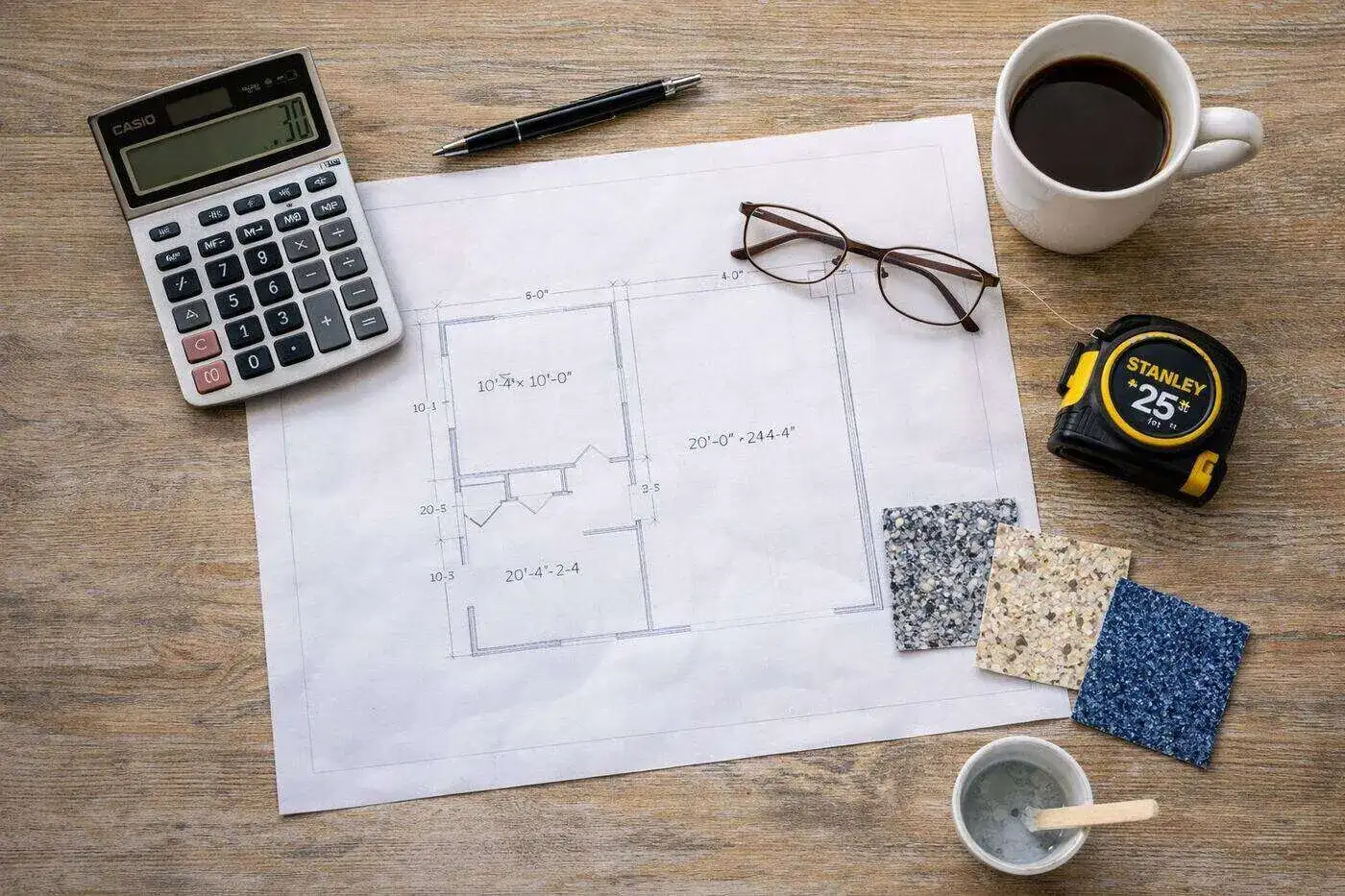
How Much Does Epoxy Flooring Cost in Lee County? (2026 Guide)
Real prices by finish and a typical 2-car garage total.
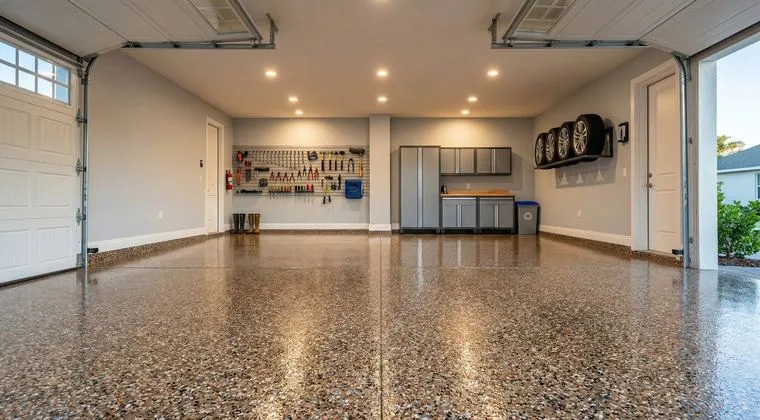
How Long Does an Epoxy Floor Last in Lee County?
Realistic lifespans and what shortens them in South Florida.
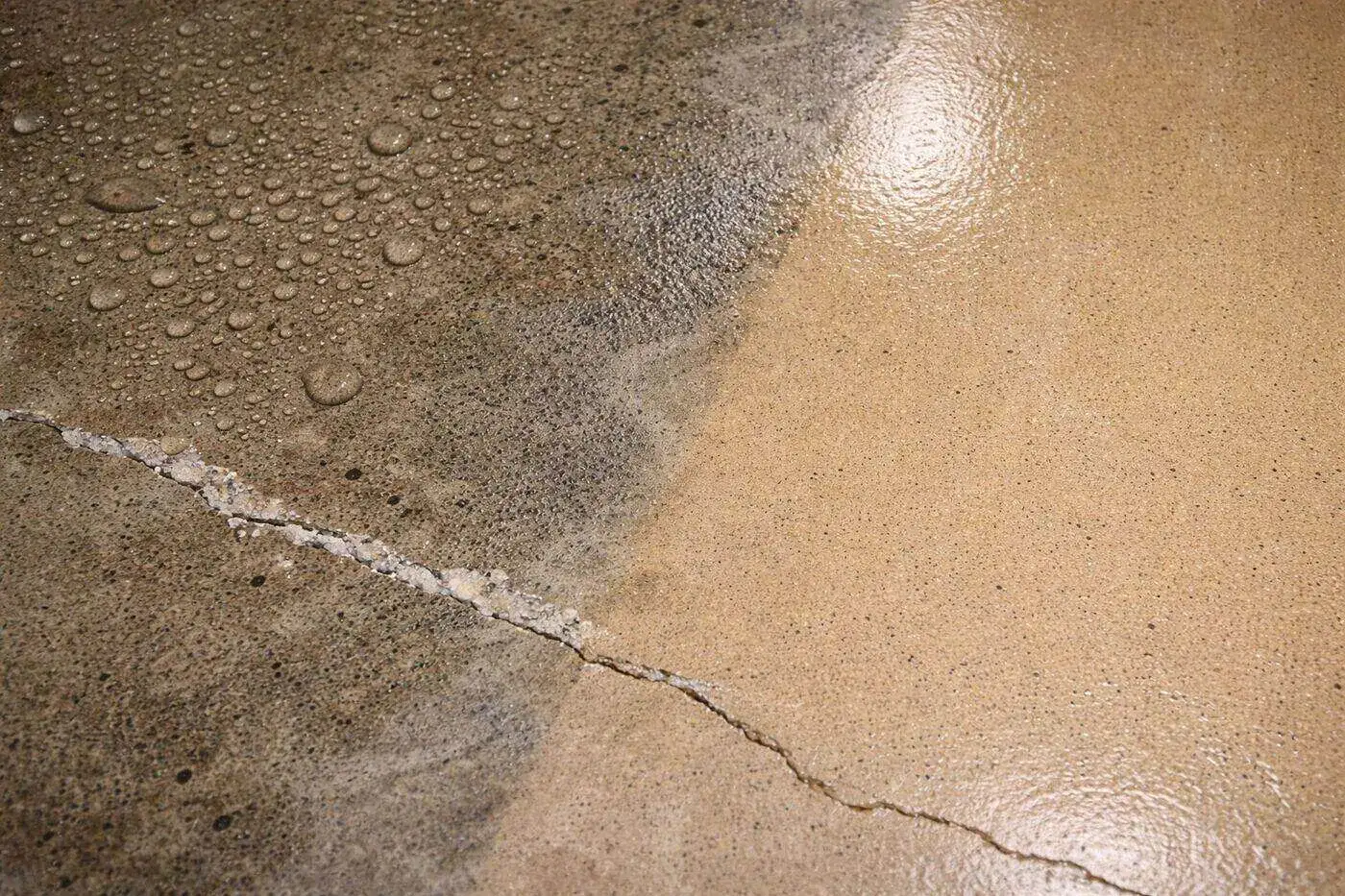
Why Epoxy Floors Fail in Lee County — and the Moisture Test That Prevents It
The high water table, MVT testing, and what to ask before you sign.